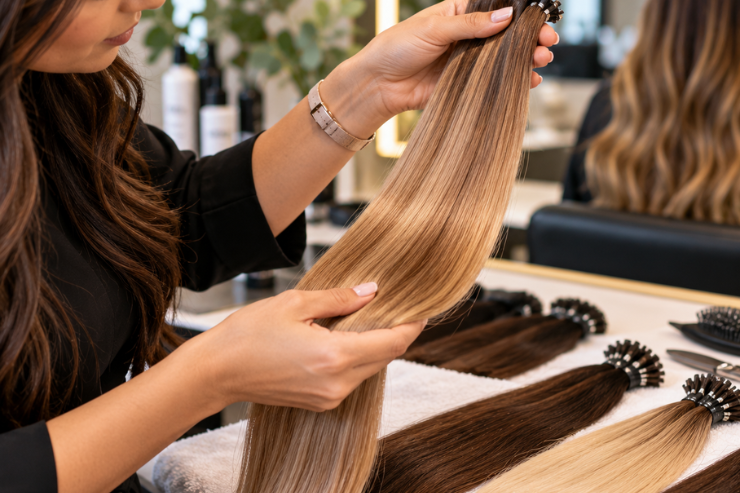
Booking your first extensions and not sure which method to pick? You’re not alone. Nano, tape-in, and keratin bond extensions all add length or volume, but they attach differently and suit different hair types and routines. This guide breaks down how each method works, who it tends to suit, and how they compare on comfort, upkeep, and styling, so you have a clearer idea of what fits you.
Why the Attachment Method Matters
The way extensions attach affects more than just how they look. It shapes how they feel against your scalp, how much daily care they need, how long they last between visits, and even how you can style your hair in between. Comparing tape-in vs nano extensions, along with keratin bonds, helps you see which approach matches your hair type, your schedule, and how you like to wear your hair day to day, rather than choosing based on name alone.
Nano Ring Extensions
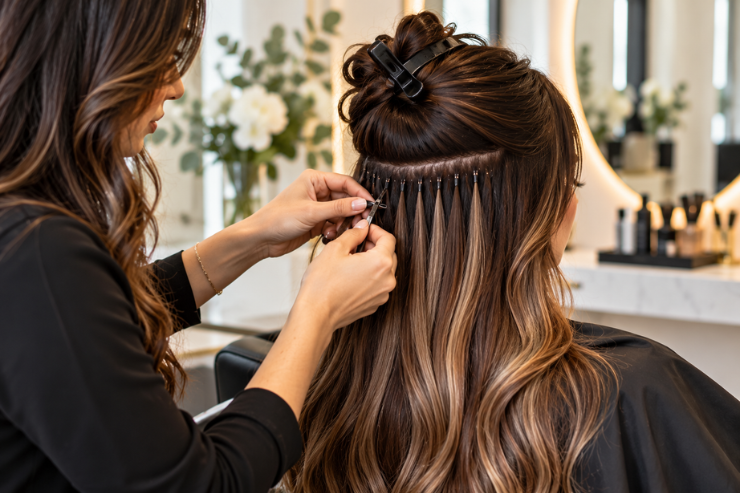
Nano ring extensions use very small rings to attach strands close to the root, without glue or heat.
How They Attach
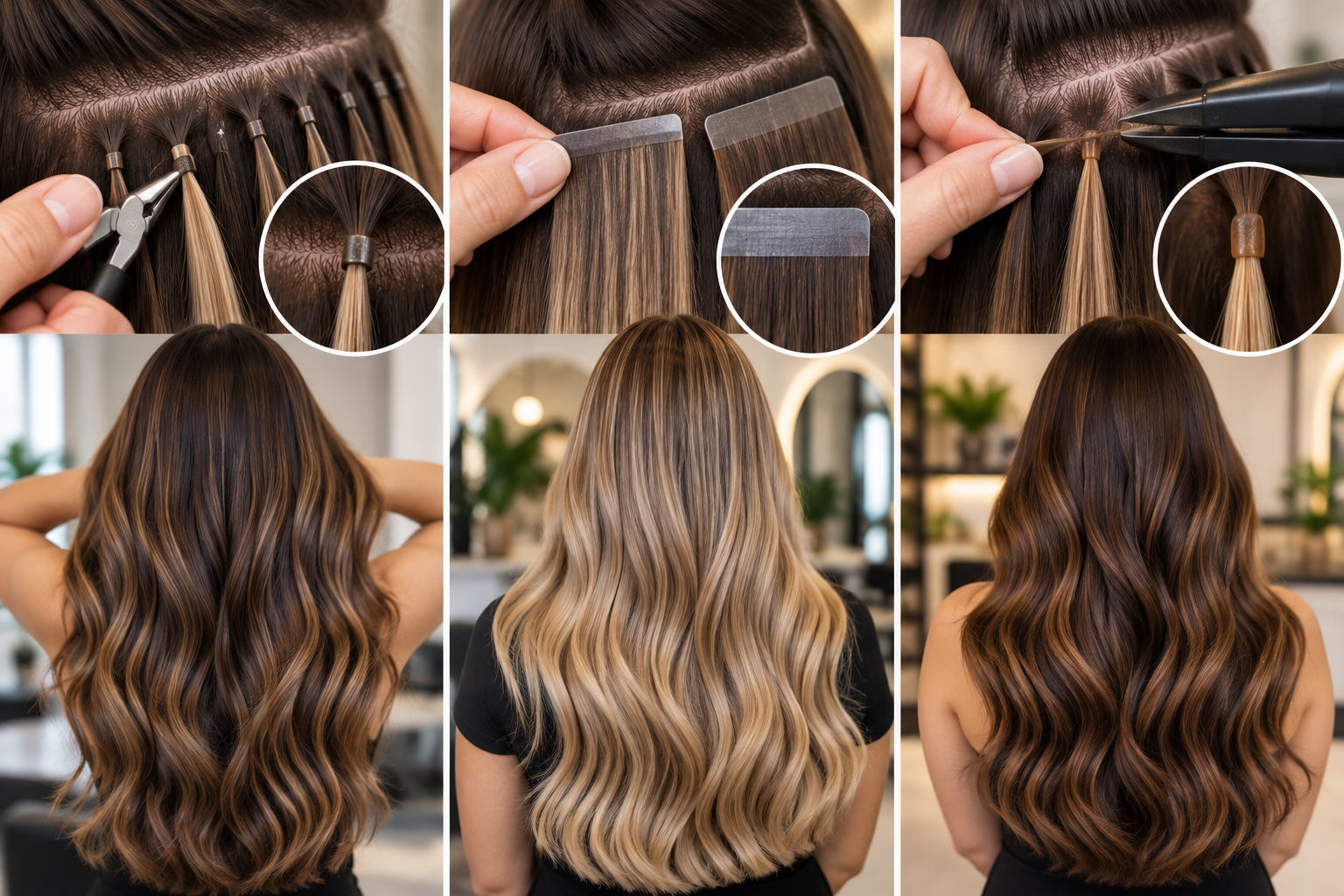
A small section of natural hair is threaded through a tiny ring along with an extension strand, and the ring is gently closed with a tool to hold it in place. This is repeated strand by strand across the head, which is part of why appointments can take time but also why placement can be very precise.
Who They Suit
Many people with fine to medium hair choose nano rings for a light, discreet feel, since the rings are small and placed individually rather than in wide sections. They’re also a common pick for people who want to avoid heat or adhesive against their scalp altogether.
Tape-In Extensions
Tape-in extensions use thin wefts that are applied close to the roots and lie flat against the head.
How They Attach
Pre-taped wefts are sandwiched around small sections of natural hair, so each weft sits flat rather than in individual strands. Because wider sections are used at once, fewer wefts are typically needed to cover the head compared with strand-by-strand methods.
Who They Suit
Tape ins are often chosen by people who want a quicker appointment and a smooth, lightweight finish, including those adding volume as well as length. They also tend to suit people newer to extensions, since the application and removal process is relatively straightforward.
Keratin Bond Extensions
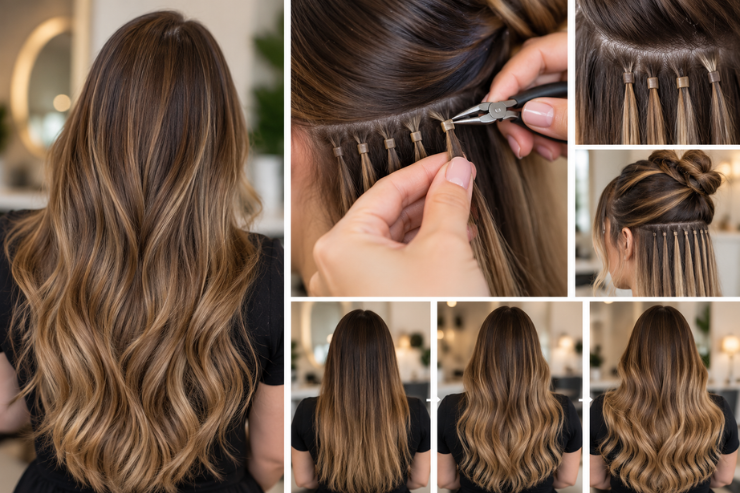
Keratin bond, or K-tip, extensions attach individual strands using keratin bonds, placed one at a time.
How They Attach
A keratin-tipped strand is fused to a small section of natural hair using a heated tool, creating a small, solid bond that sits close to the scalp. Like nano rings, this is done strand by strand, which allows for detailed placement around the hairline and part.
Who They Suit
This method suits people who want extensions that move naturally with their own hair, since each strand is placed and blended individually. It’s also a common choice for people wanting a fuller, more customized result, as bonds can be placed with extra attention around finer areas.
Comparing the Three Methods
Each method has its own strengths, and the best fit depends on your hair, your routine, and what you’d like to avoid.
| Factors | Nano Ring | Tape In | Keratin Bond |
| Comfort and weight | Lightweight, no glue or heat | Flat and smooth against the head | Natural movement, placed strand by strand |
| How discreet | Small sections, discreet near the part | Sits flat, blends well with medium to thicker hair | Small sections, discreet near the part |
| Styling and updos | Works well for updos and parted styles | Thin wefts; some avoid high ponytails near them | Flexible parting, including braids and half-up looks |
| Maintenance | Adjusted roughly every 6 to 8 weeks | Moved up roughly every 6 to 8 weeks | Adjusted roughly every 6 to 8 weeks |
| Attachment method | No heat or adhesive | Adhesive designed to be gentle and easy to remove | Heat applied; healthy, conditioned hair recommended |
| Appointment time | Longer, strand-by-strand placement | Shorter, wider sections applied at once | Longer, strand-by-strand placement |
| Investment over time | Longer application time, detailed placement | Shorter appointments, often lower labour time per visit | Longer application time, detailed placement |
Maintenance timing can vary with how quickly your hair grows and how well it holds between visits, so your stylist will confirm a schedule that suits you. Cost also depends on how much length or volume you want and how often you book maintenance, and a stylist can give you a clear estimate at your consultation.
How Your Stylist Chooses the Method for You
A few things typically come up during a consultation to help find the right fit:
- Your natural hair: Thickness, length, and growth pattern all affect how a method will hold and blend.
- Your routine: Daily styling habits and how much time you can give to hair care.
- Your goals: Subtle length, noticeable volume, or a mix of both.
- Maintenance fit: How often you can realistically come in for touch-ups.
- Comfort preferences: Whether you’d rather avoid heat or adhesive altogether.
- Current hair condition: A quick check to flag anything worth addressing first.
There’s no single best method overall; it’s about which one fits your hair and your life. A consultation brings all of this together, so you leave with a choice that makes sense for you.
Choosing the Method That Fits You
Nano, tape-in, and keratin bond extensions each bring something different to the table, from how they attach to how they feel day to day. There’s no single right answer, just the option that suits your hair, your schedule, and how you like to style it.
The Natural Hair Loft offers all three methods, so you can ask questions and compare them side by side. Before your next appointment, think about what matters most to you: comfort, styling freedom, or upkeep, and bring those priorities into your consultation.
Frequently Asked Questions
Q1. Which extension method lasts the longest?
Longevity depends on hair care, growth rate, and maintenance visits rather than the method alone. Nano, tape-in, and keratin bonds can all last several weeks between adjustments with proper care.
Q2. Can I switch from tape-in to nano extensions?
Often, yes, once your current set is removed and your natural hair is assessed. A stylist can check your hair’s condition and suggest timing for the switch.
Q3. Which method is best for very fine hair?
Many people with fine hair find nano rings or keratin bonds comfortable, since strands are placed individually. A stylist can check your hair and advise what suits it best.
Q4. Do any of these methods damage natural hair?
All three can be worn comfortably when applied correctly and maintained on schedule. Regular check-ins with your stylist help keep your natural hair healthy underneath.
Q5. How soon can I wash my hair after getting extensions?
This varies by method, so it’s worth asking your stylist directly. Most recommend waiting a short period before washing to let everything settle.