1. A close look at your own hair
Michelle checks density at the crown, temples and nape, the strength of individual strands, and
how your hair behaves when it dries naturally. Fine hair, thick hair, coloured hair and hair
recovering from damage all need different plans, and the amount of extension hair that is safe
depends on what your own hair can carry.
2. Your goal, in plain words
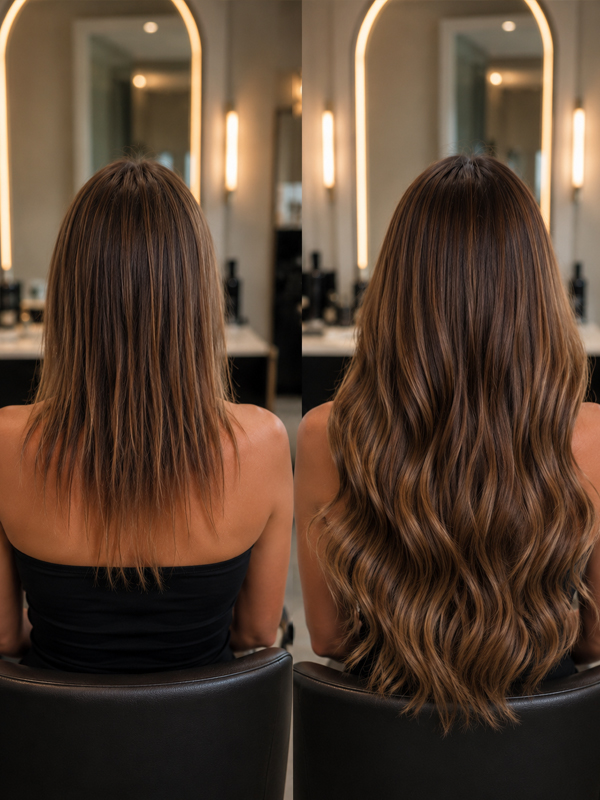
Some clients want three or four inches of length. Others want the same length with twice the
fullness, or just a fuller fringe area. Bring a photo if you have one. Michelle will tell you
honestly whether it is realistic for your hair, and what a natural version of it looks like.
3. Choosing the method
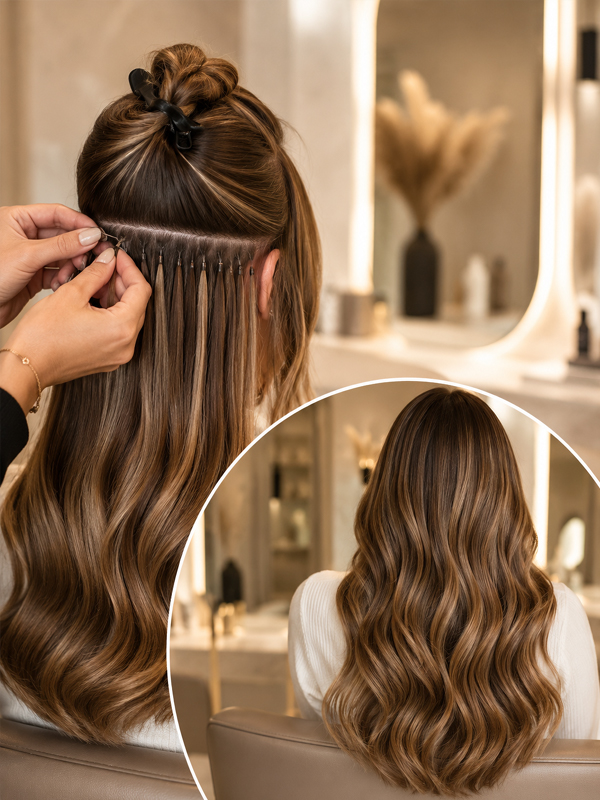
The method follows your hair, not the other way round. Nano rings suit most clients who want the
most discreet result. Tape-ins suit people who want a faster appointment and volume through the
mid-lengths. K-tips suit clients who want strand-by-strand placement and a very customised
pattern.
4. Colour and grams
Shades are matched against your root, mid-lengths and ends, and sometimes blended from two tones
so the transition disappears. You will also get a rough idea of grams. As a guide, adding volume
to fine hair often needs around 50 to 100 grams, while a full length change needs more.
5. A written plan and a quote
You leave knowing the method, the amount of hair, the appointment length, the maintenance rhythm
and the cost, which is split between the hair and the application. A 25% deposit secures your
extension appointment.
Nothing is fitted at a consultation unless you have agreed the plan. You never feel pushed into
a decision in the chair.